
Why Orange County Fix & Flip Investors Need More Than Just a Realtor or Lender

Real estate investing is usually treated as a series of separate transactions.
First you find the property.
Then you find the money.
Then you find someone to renovate it.
Then you hope everything works.
For a fix-and-flip investor, that approach can be risky.
Because every decision affects the next one.
The property determines the renovation.
The renovation determines the After-Repair Value.
The financing determines the carrying costs.
And all three determine whether there is actually a profit at the end.
That is why we created the approach behind BuilderLenderRealtorOC.com.
Instead of looking at one piece of the investment, we help evaluate the entire project through the experience of a:
Builder.
Lender.
Realtor.
With more than 27 years of experience in real estate, lending, investing, construction, renovations, and homebuilding, our goal is simple:
Help investors make better decisions before they spend their money.
The Traditional Way to Buy a Flip
Imagine you find an Orange County property listed for $850,000.
Your Realtor tells you similar renovated homes have sold for around $1.15 million.
That sounds promising.
You secure a fix-and-flip loan.
Then construction begins.
Suddenly you discover:
$25,000 in electrical work.
$18,000 in plumbing.
A roof that needs replacement.
Drainage problems.
Unpermitted improvements.
And a remodel budget that has grown by $75,000.
Meanwhile, you're paying interest every month.
The property might still be profitable.
But the investment looks very different than it did when you made the offer.
What If You Evaluated Everything Before You Bought?
Now imagine approaching the same property differently.
Before making the offer, you analyze it from three perspectives.
Realtor: What Will the Finished Property Actually Be Worth?
We start with the exit.
Who is going to buy this property?
What are comparable renovated homes actually selling for?
What improvements do those buyers expect?
What price range will the property compete in?
What is the realistic ARV?
The goal isn't to create the highest possible ARV on paper.
The goal is to establish a resale value that has enough evidence behind it to make an intelligent investment decision.
Builder: What Is Hiding Behind the Walls?
Next comes the construction analysis.
The question isn't simply:
How much will the new kitchen cost?
The bigger questions are:
What systems are nearing the end of their life?
What deferred maintenance exists?
Does the floor plan need to change?
What construction will actually improve value?
What improvements would simply be overbuilding for the neighborhood?
Are there foundation, drainage, roofing, plumbing, electrical, or structural issues?
This is where experience matters.
A beautiful property can be a terrible flip.
An ugly property can be a fantastic flip.
The difference is understanding what you are actually buying.
Lender: How Should the Project Be Financed?
Once the property and construction strategy make sense, the financing needs to fit the project.
Fix-and-flip loans may potentially provide financing for both the acquisition and renovation.
But investors should evaluate much more than the interest rate.
Consider:
Required cash
Loan-to-cost
Loan-to-value
ARV requirements
Construction draws
Interest
Points
Fees
Loan term
Extension options
Required reserves
The correct financing can help preserve capital and make the project easier to manage.
The wrong financing can eat away at profit every month.
Experience Matters More in Expensive Markets
Orange County is an incredible real estate market.
It is also an expensive place to learn by making mistakes.
Consider the difference between being wrong on a $250,000 flip and being wrong on a $1 million property.
A 10% mistake is very different.
That is why Orange County investors should pay close attention to:
Acquisition price
Construction cost
Financing cost
Holding time
Resale value
Even small percentage errors can translate into tens of thousands of dollars.
Fix & Flip Lending Is Only One Tool
Traditional fix-and-flip financing may be an excellent way to acquire and renovate a property.
But sometimes another strategy makes more sense.
Depending on the investor and property, options might include:
Fix-and-flip financing
Bridge loans
Hard money
Conventional investment financing
DSCR loans
Bank portfolio financing
Cash acquisition followed by refinancing
The loan should match the investment—not the other way around.
What Happens If You Decide Not to Sell?
This is another reason to think about financing early.
Suppose the resale market changes during the renovation.
Instead of selling immediately, you may decide to keep the property as a rental.
Now your backup strategy might involve refinancing from short-term fix-and-flip financing into longer-term investment financing such as a DSCR loan.
Having that conversation before purchasing gives you more options.
Construction Strategy Can Create the Profit
Many investors believe the money is made by purchasing below market value.
That is certainly important.
But a significant amount of value can also be created through smart construction decisions.
For example:
A poor floor plan might be corrected.
Unused space could potentially become another bedroom.
A second bathroom might dramatically improve marketability.
An outdated kitchen could be opened to the living space.
Outdoor living could become part of the home's appeal.
An ADU opportunity might create additional long-term value.
Construction is not simply an expense.
When done strategically, construction can be part of the investment thesis.
We Have Been on the Investor Side Too
Our perspective does not come only from helping people obtain loans or buy homes.
It comes from decades of experience working directly with real estate, lending, construction, homebuilding, property renovation, and investment projects.
That creates a different conversation.
Instead of simply saying:
"You qualify for the loan."
We want to ask:
"Does the investment make sense?"
Instead of simply saying:
"The property is available."
We want to ask:
"Is this the right property?"
Instead of simply saying:
"Here is the renovation estimate."
We want to ask:
"Does this renovation create enough value?"
Builder. Lender. Realtor.
That is the idea behind BuilderLenderRealtorOC.com.
Three areas of experience applied to one investment.
BUILDER
Evaluate condition, renovation strategy, construction risks, and value-add opportunities.
LENDER
Evaluate fix-and-flip financing, cash requirements, loan structure, and potential exit financing.
REALTOR
Evaluate purchase price, comparable sales, marketability, ARV, and resale strategy.
The objective is not simply to complete a transaction.
The objective is to help you understand the transaction before committing your money.
Found a Potential Orange County Flip?
Send us the property before you make the offer.
We can help you evaluate:
What should I pay?
What will the renovation probably cost?
What could the finished property realistically sell for?
How can the project be financed?
How much cash will I need?
What are the biggest risks?
What is my backup exit strategy?
A good flip starts with buying the right property.
A great flip starts with understanding the entire project.
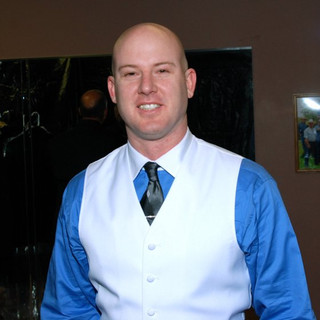
Dante MillerReal Estate Broker | Mortgage Loan Originator | Construction Advisor
27+ Years of Real Estate, Lending & Construction Experience
California Real Estate BrokerDRE #02146897
Mortgage Loan OriginatorNMLS #265498
This information is provided for educational purposes only and does not constitute investment advice, a commitment to lend, construction contracting services, legal advice, or tax advice. Loan programs, terms, rates, leverage, renovation funding, and underwriting guidelines vary by lender and may change. Investment results are not guaranteed. Real estate, mortgage lending, and construction advisory services may be provided through separate companies and are not necessarily affiliated.



Comments