
DSCR Loans in Orange County: How Investors Can Combine Real Estate, Lending & Construction Strategy

Orange County real estate can be a great place to invest, but it is not an easy market to buy into blindly.
Property values are high. Rental income varies dramatically by neighborhood and property type. Older homes may need substantial improvements. ADU opportunities can change the economics of a property. And financing the wrong property the wrong way can quickly turn what looked like a good investment into an expensive mistake.
That is where a DSCR loan can become a powerful tool.
But the financing is only part of the equation.
For many Orange County investors, the bigger advantage comes from evaluating the property from three different perspectives at the same time:
Builder. Lender. Realtor.
Instead of finding the property first, figuring out financing second, and discovering construction issues later, we can help investors look at the entire opportunity before making a decision.
What Is a DSCR Loan?
DSCR stands for Debt Service Coverage Ratio.
A DSCR loan is designed primarily for real estate investors. Instead of relying heavily on your personal income, W-2s, or tax returns, the lender focuses more heavily on whether the investment property can generate enough rental income to support its monthly housing expense.
The basic calculation is:
Monthly Rental Income ÷ Monthly Qualifying Property Expense = DSCR
For example:
A property rents for $5,000 per month.
The qualifying monthly property expense is $4,000 per month.
The DSCR would be:
$5,000 ÷ $4,000 = 1.25
A 1.25 DSCR means the property's qualifying rental income is approximately 125% of its qualifying monthly housing expense.
For investors, particularly self-employed investors or investors with multiple properties, this can create financing opportunities that may not fit traditional conventional underwriting.
Why DSCR Loans Can Be Valuable in Orange County
Orange County presents some unique challenges for real estate investors.
Purchase prices are often significantly higher than in many other parts of the country. That means investors have to think beyond simply finding a house that rents for more than the mortgage.
You may need to consider:
Existing market rent
Potential future rent
Property condition
Renovation costs
ADU potential
Garage conversions
Bedroom or bathroom additions
Deferred maintenance
HOA restrictions
Short-term rental restrictions
Property taxes
Insurance
Financing costs
Long-term appreciation potential
Exit strategy
That is why I believe Orange County investors benefit from looking at a property as a complete business opportunity, not simply a house.
The Advantage of a Builder, Lender & Realtor Approach
Most real estate transactions are fragmented.
You talk to a real estate agent about the property.
You talk to a lender about the loan.
You talk to a contractor after you purchase it.
Each professional may be very good at what they do, but they are often looking at only one part of the transaction.
Our approach is different.
At BuilderLenderRealtorOC.com, we try to connect all three pieces from the beginning.
The Realtor Perspective: Are You Buying the Right Property?
The first question should not simply be:
Can I buy this property?
The better question is:
Should I buy this property?
As a real estate broker, I can help evaluate factors such as:
Comparable sales
Neighborhood trends
Rental demand
Property configuration
Potential resale value
Competition
Location
Lot size
Property functionality
Long-term marketability
An investment property should make sense both today and years from now.
The Lender Perspective: How Should You Finance It?
Once a potential investment has been identified, financing should be evaluated as part of the investment strategy.
A DSCR loan may make sense when an investor wants to qualify primarily based on the property's rental income rather than traditional personal income documentation.
Depending on the lender and program, DSCR financing may work particularly well for:
Self-employed investors
Business owners
Investors with significant tax deductions
Investors building larger rental portfolios
Investors purchasing through an LLC
Long-term rental properties
Certain short-term rental properties
Investors who have difficulty qualifying conventionally despite strong assets or cash flow
But DSCR is not automatically the best answer.
Depending on the property and investor, conventional financing, bank portfolio financing, bridge financing, hard money, or another investment loan structure may be worth comparing.
The goal is not simply to get a loan.
The goal is to choose financing that fits the investment strategy.
The Builder Perspective: Can the Property Be Improved?
This is where many investment opportunities are either created or destroyed.
Imagine two Orange County homes selling for similar prices.
One may have very little upside.
The other may have the ability to:
Add a bedroom
Add a bathroom
Convert unused space
Reconfigure the floor plan
Add an ADU
Convert a garage where legally permitted
Improve parking
Improve curb appeal
Correct deferred maintenance
Increase rental income
Increase resale value
Those possibilities can completely change the economics of the investment.
However, investors also need to recognize potential problems before purchasing.
A seemingly inexpensive property may have:
Foundation problems
Drainage issues
Significant electrical upgrades
Plumbing problems
Roof replacement needs
Structural modifications
Unpermitted additions
Expensive retaining walls
Difficult site access
Major renovation requirements
Understanding these conditions before purchasing can be just as important as negotiating the purchase price.
DSCR + Construction Can Create a Different Investment Strategy
One of the most interesting ways to use DSCR financing is to look beyond the property's current condition.
For example, an investor might find an older Orange County property with:
Current rent: $4,500 per month
But after improvements, the property might potentially command:
Future rent: $5,500 per month
If the lot also has realistic ADU potential, the long-term rental picture could become even more attractive.
Now the analysis becomes much more interesting.
Instead of simply asking:
Does today's rent cover today's mortgage?
We can ask:
What could this property become?
That is where real estate, construction, and financing start working together.
ADUs Can Be Especially Important in Orange County
Accessory Dwelling Units have created another layer of opportunity for California property owners and investors.
On the right property, an ADU may potentially provide:
Additional rental income
Multigenerational housing
Increased property utility
Greater long-term value
Flexibility for future occupants
However, not every property is equally suited for an ADU.
Lot configuration, setbacks, utilities, parking, access, jurisdictional requirements, construction cost, and existing improvements all matter.
An investor should not buy a property simply because someone says:
"You can build an ADU."
The better question is:
Can an ADU realistically be built here, what might it cost, and does the additional income justify the investment?
An Orange County Investment Example
Imagine an investor is considering purchasing a home for $1,000,000.
At first glance, the property may not appear to produce enough rent to create strong cash flow.
But suppose the property has:
An outdated interior
A large underutilized lot
An inefficient floor plan
Possible ADU potential
Strong rental demand in the area
Instead of analyzing the property only as it exists today, we could evaluate several scenarios.
Scenario 1: Rent It As-Is
What will it rent for immediately?
What is the DSCR?
What will the monthly cash flow look like?
Scenario 2: Renovate the Main House
Could $75,000 or $100,000 in improvements substantially increase rent or property value?
Scenario 3: Add an ADU
Would an additional unit create enough rent to justify construction?
Scenario 4: Long-Term Resale
If the property is improved strategically, what might it be worth in five or ten years?
Now the investor can make a decision based on a strategy rather than emotion.
DSCR Isn't Just About Qualifying
This is an important distinction.
Some investors look at DSCR financing and think:
Great. I don't have to show my income.
That may be one advantage, depending on the loan program.
But that should not be the primary reason to use DSCR financing.
A good investor should ask:
What is my true monthly cash flow?
How much money am I putting into the deal?
What return am I receiving on that capital?
What happens if the property is vacant?
What if repairs cost more than expected?
What happens if rents decline?
Is there a prepayment penalty?
Could I refinance later?
What is my exit strategy?
What improvements could increase value?
What improvements are unnecessary?
The ability to qualify for a loan does not automatically make a property a good investment.
One Property. Three Perspectives.
The concept behind BuilderLenderRealtorOC.com is simple.
When you're considering an investment property, you should be able to evaluate it from three perspectives:
REALTORIs it the right property at the right price?
LENDERWhat financing structure makes the most sense?
BUILDER / CONSTRUCTION ADVISORWhat problems exist, and what improvements could create additional value?
Those three conversations normally happen separately.
We bring them together.
Why This Matters in Orange County
Orange County is an expensive market.
That makes mistakes expensive too.
Overpaying by $50,000 matters.
Underestimating construction by $75,000 matters.
Overestimating rent by $500 per month matters.
Choosing the wrong loan structure matters.
Missing an opportunity to add value can matter just as much.
The more expensive the property, the more important it becomes to understand the entire financial picture before making the investment.
Before You Buy Your Next Orange County Investment Property
If you're considering purchasing an investment property in Orange County, we can help you look beyond the listing.
We can evaluate:
The PropertyDoes the purchase make sense?
The FinancingCould DSCR or another investment financing strategy work?
The Rental IncomeWhat does the property's cash flow look like?
The Construction OpportunityCan improvements increase rent or value?
The RisksWhat could become expensive after closing?
The Exit StrategyDoes the property still make sense several years from now?
The goal is not simply to help you buy a property.
It is to help you make a better real estate investment decision.
Thinking About Buying an Investment Property in Orange County?
Before you make an offer, let's look at the property together.
Whether you're considering a rental property, renovation project, ADU opportunity, or long-term investment, we can help evaluate the real estate, financing, and construction strategy as one complete picture.
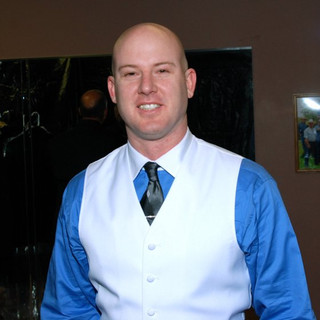
Dante MillerReal Estate Broker | Mortgage Loan Originator | Construction Advisor
California Real Estate BrokerDRE #02146897
Mortgage Loan OriginatorNMLS #265498
This article is provided for educational and informational purposes only. It is not a commitment to lend, an offer of specific loan terms, investment advice, legal advice, tax advice, or construction contracting services. Loan programs, rates, fees, down-payment requirements, DSCR calculations, prepayment provisions, property eligibility, and underwriting guidelines vary by lender and may change. All financing is subject to lender underwriting and approval. Real estate, mortgage lending, and construction advisory services may be provided through separate companies or entities and are not necessarily affiliated with one another. Property improvements, ADUs, conversions, and construction projects are subject to applicable building codes, permitting requirements, zoning, HOA restrictions, and other governmental requirements. Consult appropriate licensed legal, tax, financial, construction, and insurance professionals regarding your individual circumstances.


Comments